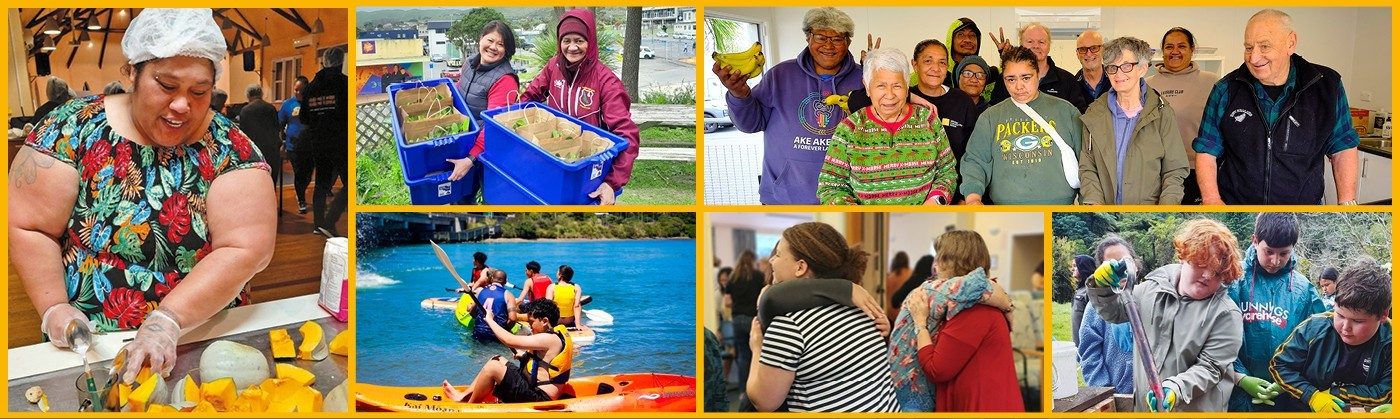
Wesley kaimahi and whānau cooking, kayaking, gardening and sharing kai.

Being a Kaupapa Te Tiriti Organisation

In 2020 we made a commitment to become a Kaupapa Te Tiriti Organisation.

We are not Kaupapa Māori nor are we Kaupapa Mainstream. We exist in between, weaving different views and approaches. Our Methodist whakapapa, Te Ara Wēteri and the whānau we work alongside inform and shape how we work.

What does being Kaupapa Te Tiriti mean?

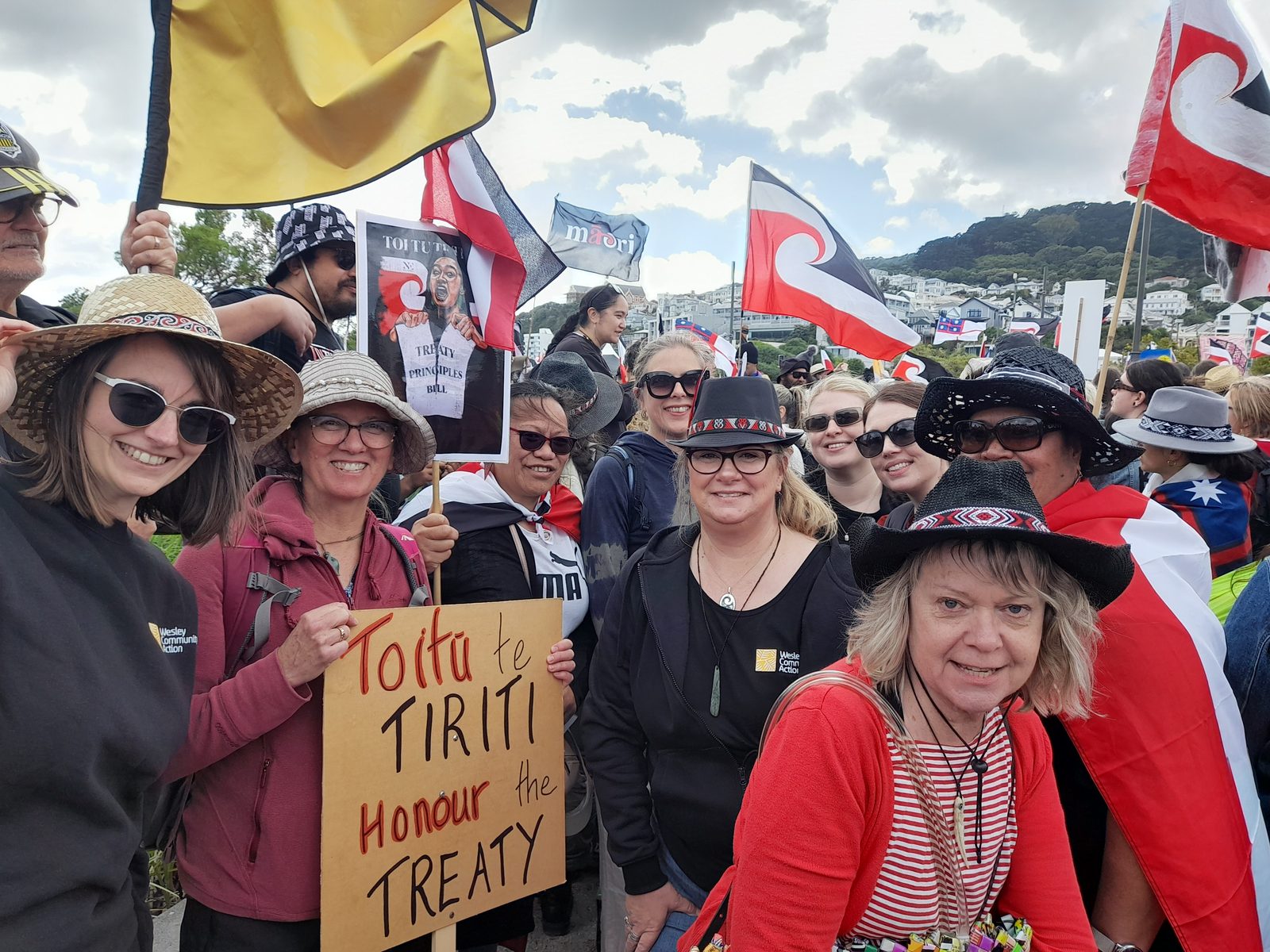
Wesley kaimahi at the hīkoi against the Treaty Principles Bill, holding a sign reading Toitū te Tiriti, Honour the Treaty.
Wesley kaimahi at the hīkoi against the Treaty Principles Bill, November 2024.

We are committed to enacting the vision and agreements of Te Tiriti: Bringing the power of different worlds together. We’re working to ensure that colonisation’s ‘intergenerational infection’ has space to surface and heal.

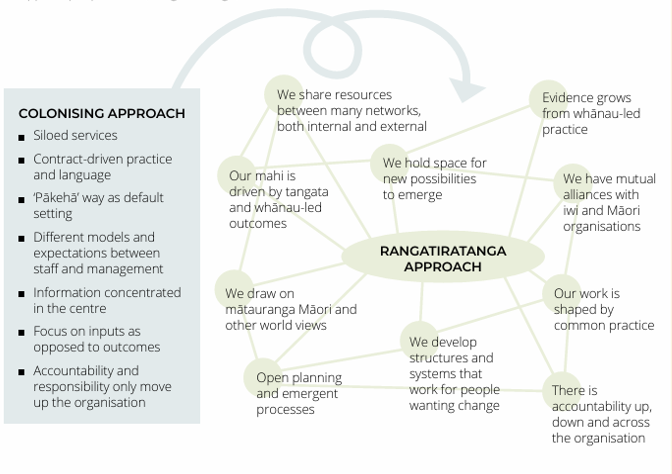
To do this our mahi is shifting from ‘doing to people’ (a colonising approach) to supporting people ‘to do’ (a rangatiratanga approach).

Our mahi is whānau-led, community-driven and done with a warm heart.

As a Kaupapa Te Tiriti organisation we work to:

  1. Promote mātauranga me te reo Māori by activating opportunities to foster and strengthen Māori knowledge systems and te reo while resisting formulaic / tick-box approaches.

  2. Practice kaitiakitanga to support ‘mamae to mana aroha’ shifts in all people – moving from trauma and ‘stuckness’ towards openness, compassion, understanding and love. From survival mode to care and creative innovation mode.

  3. Enable our kaimahi to and their own intergenerational inheritance to keep growing better ‘’ bridges for collective hauora.

    TapHover over or click the underlined words to see what they mean.

  4. Restore the rangatiratanga of tāngata, whānau, hapori, hapū and iwi.

  5. Resist policies and practices that devalue Te Tiriti and grow the capacity to identify and call out colonial assumptions and ways of working.

What guides our work?

Our evolution as a Kaupapa Te Tiriti organisation means our understanding of the past guides the impact of how we work in the present to help shape the future.

Past

Inamata

Understanding the past

Ngā wā o mua (The past which is in front of us)

Opening a fuller picture of Aotearoa’s history – including the ongoing negative impacts of colonisation – enables us to get on the same page about our collective ancestry. It creates opportunities to explore our own strands of whakapapa and connects our deeper collective knowing and moving.
Present

Ināianei

Working in the present

Now understanding Inamata, we work in the present time

Our work in the present involves healing and untangling knots of mamae to restore the mana, vision and agreements of Te Tiriti o Waitangi. This entails letting go of thinking, practices and structures that maintain harmful colonial ways and growing new (or reclaiming old) approaches.

This process is guided by Te Ara Wēteri (The Wesley Way) while working alongside tangata, whānau, hapori, hapū, iwi and kaupapa Māori organisations.

Future

Anamata

Shaping the future

Ngā wā o muri (The future which is behind us)

Our work in the present shapes what happens in the future. When mokopuna considerations are at the centre of seeding equitable, relationally rich and healthier spaces today, the potential and importance of tomorrow become clear.

Te Ahunga ki Tua 2023 ki te 2035

Our direction of travel

Our Te Ahunga ki Tua 2023 ki te 2035 (Strategic Directions document) outlines our direction of travel towards a rangatiratanga approach.

Download Te Ahunga ki Tua
Diagram contrasting a colonising approach (doing to people) with a rangatiratanga approach (supporting people to do).

Glossary

whakawātea
An active state of ‘freeing and clearing’
whakamana
An active state of ‘restoring and awakening’
hono i mauri
The connection point where one life force meets another, while each retains their own distinct nature, e.g. Atua light & pēpi spark; the action of Hongi; kaimahi and tāngata/whānau; organisational interactions

How it looks in practice

As a Kaupapa Te Tiriti organisation we:

Open each one to see examples from our mahi.

01

Meet tangata and groups navigating traumatised systems as they are – aata whakarongo – with no judgement but, instead, with radical acceptance

  • We welcome everyone to the NZ P-Pull table.
  • We respect club whānau and acknowledge their stories.
  • We don’t judge mātua in our Mana Whānau programme who are struggling with parenting in a system that fuels stress.
02

Provide opportunities for kaimahi to explore their whakapapa and bring and share their ‘full self’ in the workplace

  • Regular wānanga for the four groups that reflect our diverse workplace – Tangata Whenua, Tāngata Tiriti, Tāngata Tauiwi and Tagata Folau – to help inform the work of the whole organisation.
  • Encourage kaimahi with cultural / historical mamae to apply Māori learnings to reconnect to their own cultural history – for example by celebrating Cook Islands Language Week.
  • Provide opportunities for recent migrants to share stories of their journey to Aotearoa and the challenges of fitting into the white ‘normal’ culture.
03

Encourage kaimahi to learn and speak te reo Māori as well as other languages

  • Pōwhiri co-led by Cook Islands and Māori kaimahi.
  • Promote the use of te reo and other mother tongues in the workplace and value this as healthy.
04

Grow a Wesley tikanga that connects our diverse teams and mahi and respects mana whenua kawa

  • Connect sessions, whakapono, karakia.
  • Mihi whakatau for new kaimahi.
05

Put time and aroha into approaches that build relationships

  • Taking time to develop relationships with carers in the Intensive Carer Service before embarking on more intensive work with them.
  • Good Cents – using games and other group activities to help Good Cents participants relax and build trust in each other – and their co-ordinator.
  • Taking a spacious approach to forming connections with tamariki and their whānau as part of the Family Start programme.
06

Support whānau and community wānanga to reveal the impact of trauma and encourage spaces for healing and innovation

  • Developing and hosting Brotalk workshops.
  • Providing a safe space for Good Cents participants to link their financial issues to trauma responses.
07

Challenge injustice and institutional racism

  • Organisational submission on the Principles of the Treaty of Waitangi Bill. We also made it easy for kaimahi to join the associated hīkoi against the Bill in November 2024.
  • Joining coalitions like Child Rich Communities that advocate for changes to the system.